



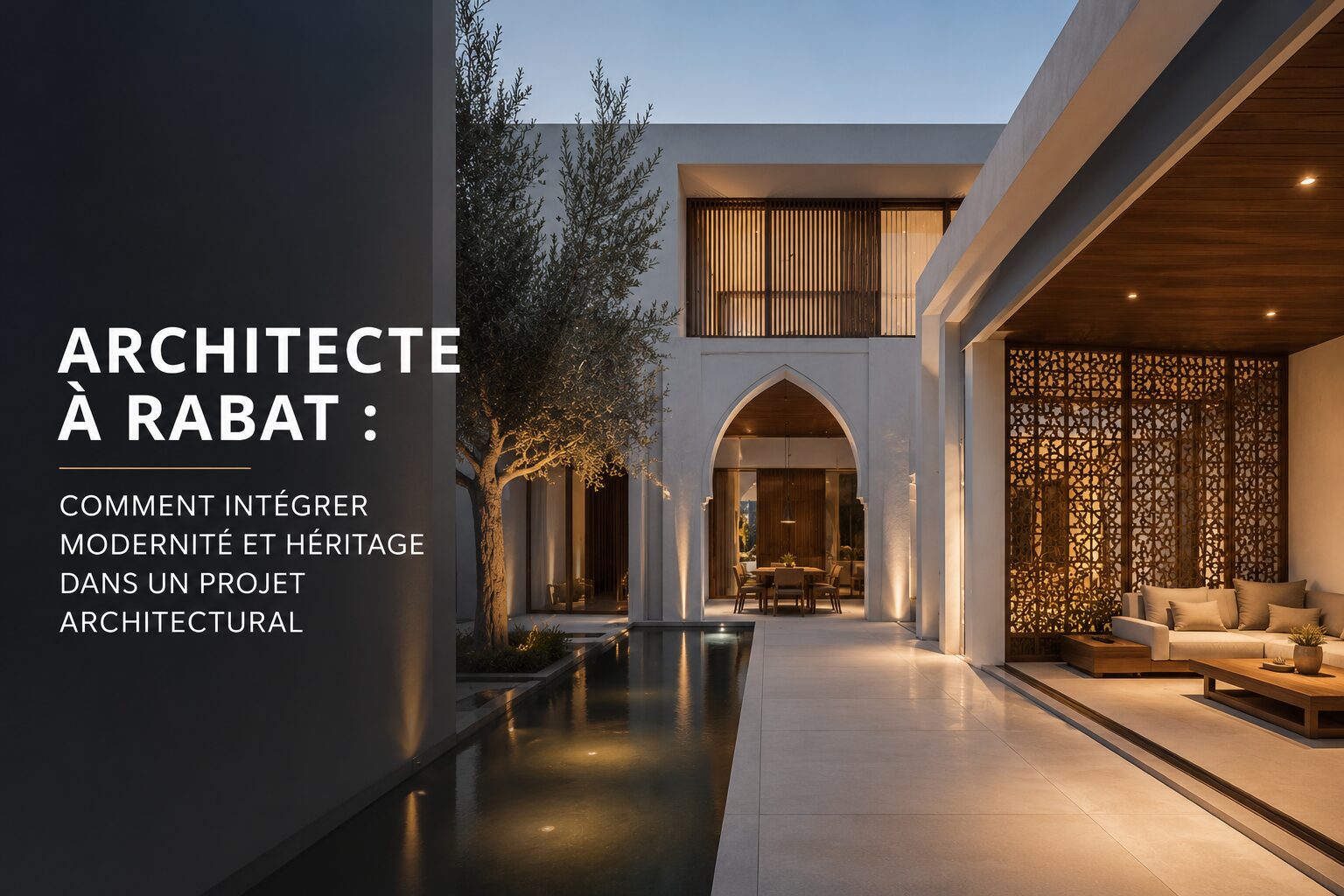
Architect in Rabat: how to integrate modernity and heritage in an architectural project
Rabat possesses a unique architectural identity in Morocco. The Kingdom’s administrative and cultural capital, the city is distinguished by a particular balance between historical heritage, contemporary urban planning, and a diversity of architectural styles. Between its medina, administrative districts, modern villas, and new urban centers, Rabat offers an architectural landscape where Moroccan heritage and modernity coexist.
In this context, designing an architectural project in Rabat requires deeper reflection than mere aesthetic pursuit. Architecture must engage with the city’s history, its uses, its climate, and its urban development. The architect’s role in Rabat, therefore, is to create projects capable of integrating contemporary requirements without compromising the local architectural identity.
Today, this question is central to the design of contemporary villas, restaurants, offices, and facilities in Rabat. How can modern architecture be produced without losing its connection to the local area and culture? How can innovation, comfort, and new technologies be integrated while respecting the spirit of the place?
Rabat: a city between heritage and contemporary architecture
Rabat’s architectural identity has been built through several historical periods. The city combines traditional Moroccan heritage, urban planning from the protectorate era, and more recent contemporary architecture.
This diversity creates a particularly rich, but also demanding, environment for architects working in Rabat. Each project must take into account:
- the urban context
- the characteristics of the neighborhood
- local customs
- climate constraints
- the scale of the existing building
In neighborhoods like Souissi, Hay Riad, and Agdal, contemporary architecture now occupies a prominent place. However, the most coherent projects remain those that manage to create continuity with their surroundings rather than a jarring break.
Architectural modernity and adaptation to the climate of Rabat
One of the major challenges for architecture in Rabat concerns climate adaptation. The city’s Atlantic climate directly influences the way residential and commercial spaces are designed.
Successful contemporary architecture in Rabat must incorporate:
- natural light management
- sun protection
- natural ventilation
- the relationship between interior and exterior
- landscape integration
Projects that simply replicate international models without adapting to the climatic context often generate uncomfortable and energy-intensive spaces.
In the design of contemporary villas in Rabat, the objective today is to produce bright and open spaces while controlling thermal inputs and quality of use.
Patios, plays of shadow, spatial transitions and protected outdoor spaces remain particularly relevant elements in contemporary Moroccan residential architecture.
The importance of Moroccan architectural heritage
Integrating Moroccan architectural heritage does not mean literally reproducing traditional architecture. Rather, the challenge lies in understanding the fundamental principles that have historically structured Moroccan spaces.
Traditional Moroccan architecture placed great importance on:
- to intimacy
- to the hierarchy of spaces
- in the light
- to the relationship with outdoor spaces
- passive climate comfort
These principles remain extremely relevant today.
In many contemporary projects in Rabat, architects reinterpret these elements through modern forms, contemporary materials and more open spatial organisations.
This approach makes it possible to produce architecture rooted in its territory while meeting the expectations of a contemporary lifestyle.
Designing projects adapted to new lifestyles
Lifestyles in Rabat are changing rapidly. Needs related to teleworking, flexible spaces, comfort, and technological integration are now influencing architectural design.
Residential projects must now incorporate:
- multipurpose spaces
- a better quality of natural light
- usable outdoor spaces
- smoother traffic flow
- a strengthened connection with the landscape
However, this modernization must remain consistent with local practices and the Moroccan way of life.
At AGA Studio, this reflection guides the design of many projects carried out in Rabat. The agency develops an architectural approach that seeks to create a balance between contemporary style, climate adaptation and local identity.
Several contemporary villa projects in Rabat illustrate this desire to design open, elegant and functional spaces, while maintaining a strong coherence with their urban and cultural environment.
Discover our contemporary villa projects in Rabat
See our architectural achievements in Rabat
The role of the architect in Rabat today
The profession of architect in Rabat is evolving within a constantly changing urban context. Between heritage, urban development and new societal expectations, projects today must address multiple challenges.
The architect’s role is no longer limited to producing an architectural image. They must design sustainable, coherent spaces that are adapted to their context.
This approach involves:
- an understanding of the territory
- mastering climatic constraints
- a reflection on uses
- attention paid to quality of life
The most successful projects in Rabat are often those that manage to create contemporary architecture without erasing the identity of the place.
The future of architecture in Rabat probably depends on this ability to reconcile modernity, heritage and local adaptation.


